
Chaos and Uncertainty over US Tariffs Flip-Flop
February 22, 26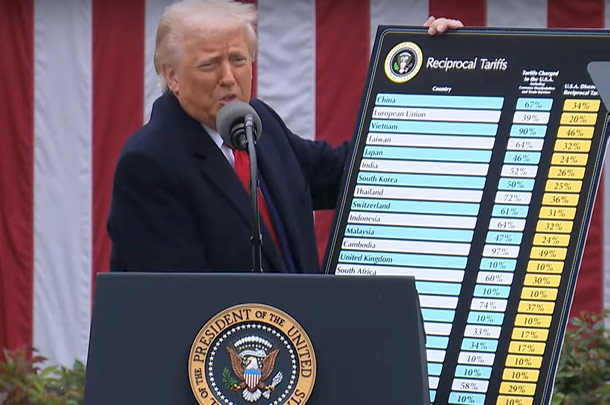
(IDEX Online) - The diamond industry is facing chaos and uncertainty after U.S. tariffs were struck down by the Supreme Court - only to be immediately re-introduced by President Donald Trump using different legislation.
On Friday (20 February), the Supreme Court ruled that Trump had exceeded his presidential powers in imposing reciprocal tariffs, and that they were therefore illegal.
Trump hit back with an executive order imposing a 10% tax on all U.S. imports, effective from Tuesday (24 February). He later said it would rise to 15%.
The new order was issued under emergency economic‑stabilization powers, rather than the reciprocal measure that courts rejected - a legal distinction that could delay further challenges but has done little to calm markets.
Tariffs have largely paralyzed diamond manufacturing in India, where over 90% of the world's stones are polished. The U.S. imposed a reciprocal tariff of 25% on all Indian imports last August, followed by an additional 25% as punishment for buying Russian oil.
Earlier this month, Trump announced he would effectively slash tariffs on Indian imports from 50% to 18% as part of a new trade deal, a move welcomed by India's Gem and Jewellery Export Promotion Council (GJEPC) as a "vital relief measure".
In practice, the flurry of rulings and reversals has left importers confused about how to treat money already paid under the now-voided tariffs. U.S. customs authorities have confirmed that payments collected before the ruling may be refundable, but only once implementing legislation is amended - a process that could take months.
Developments in recent days have reduced tariffs on Indian goods to roughly 15%, but in a climate of such volatility the prevailing mood is anxiety rather than relief.
Frequent policy reversals make trade planning nearly impossible for manufacturers and exporters; prices and supply chains could fluctuate sharply as companies try to anticipate U.S. import costs.
In addition, the new duty will be automatically deducted on arrival, leaving traders temporarily exposed to double payment until credits or refunds are settled.
Manufacturers are reportedly slowing polishing work and delaying shipments, waiting for certainty on final duty levels and refund procedures. Analysts warn that prolonged ambiguity could constrict cash flow across the pipeline - from traders and polishers to retailers - especially if rebate funding is slow to materialize.
Pic shows President Donald Trump announcing reciprocal tariffs last April.